Introduction
Deborah Lipstadt, American historian, diplomat, and President Biden’s ambassador to combat antisemitism, has repeatedly analogized Jew-hatred to a mutating virus which “cannot be cured.” I share Lipstadt’s perspective that antisemitism functions as a type of virus and would add that it often manifests itself as a highly contagious one at that. Instances of Jew-hatred are rarely one-off occurrences; rather, they frequently “spread,” expanding the net of hate. Applying this lens to the Trial of the Talmud in Paris, 1240, I believe that the disputation should be seen as a “super-spreader” event which greatly accelerated antisemitism in Medieval Europe. This paper explores the question of how the Disputation of Paris and the impetus behind it had far reaching effects, from heightened discriminatory laws to a fundamental shift in Christian perceptions of Jews. While it is challenging to proclaim a particular event as serving as the catalyst for later historical trends as many variables contribute to broader change, I will argue that the Trial of the Talmud should be seen as provoking a significant rise in anti-Jewish fervor. To demonstrate this, I first examine the prevailing Christian attitude toward Judaism pre-1240, followed by a discussion of the Trial’s aim as an intellectual attack on Judaism. I then explore the impact of the Trial on French Jewish life as well as on European Jewry as a whole. In my view, a comprehensive analysis reveals that the Trial of the Talmud propagated the virus of antisemitism, setting the stage for a broadening assault on Judaism in the decades to come.
Part I: Christian Policy Pre-1240
To best appreciate the impact of the Trial of the Talmud, it is necessary to first place the event in its broader context. At that time in Christian Europe, the prevailing view was that Christianity was an improved replacement for Judaism—the Biblical metaphor often used was that the passed-over older son (Ishmael/Esau) represented Judaism while the chosen younger son (Isaac/Jacob), who overshadowed his older brother in significance, symbolized Christianity. This stance led many Christians to despise Jews and consider them inferior. Early on, the Church Father Tertullian (155-240) argued that the Christians had been chosen by God to replace Jews because Jews were less honorable. As Christianity grew, denigrating Judaism was desired as means of bolstering Christian self-confidence. As Melito of Sardis (100-180) claimed, if the “model (Judaism) is made void, conceding the image to the truly real (Christianity)” then this would strengthen the underpinnings of Christianity.[1] Conversely, the existence of sustained Judaism could be construed as an ongoing threat to Christianity. After all, why would the old, outdated model of Judaism still be practiced if Christianity were a superior replacement? This perspective of Jewish undesirability, coupled with hating them as the “enemy within,” culminated in the brutal crusades which involved the mass murder, rape, and torture of Jews.
Nonetheless, the picture of Christianity’s attitude toward Judaism is not as simple as pure disdain. Some early Christian thinkers maintained partly benign attitudes toward Jews. For example, Paul (33-64) contended that “the Jews are entrusted with the oracles of God”[2] and that they are “the adherents of the law.” [4]Saint Augustine (354-430) believed that the Jews “bear living witness to the … verities of Christianity.”[3] Many historians, such as James Carroll, maintain that Augustine’s view was essential to the tolerated status of Judaism in Christian Europe[5]. Beyond providing testimony to the prophecies of Christ, Jews were perceived as guardians of Scripture (despite their “incorrect” understanding).[6] Jews served as book bearers, thereby preserving the literal Christological interpretation of the Old Testament.[7] As the prominent theologian Bernard of Clairvaux (1090 – 1153) put it, “the Jews are not to be persecuted, killed, or even put to flight… Indeed, the Jews are for us the living letters of Scripture, constantly representing the Lord’s passion.” [8]
Part of the general Christian view was that Jews were worthy of toleration on the road to a possible conversion. Paul claimed that Jews served a unique theological purpose whereby they would convert to Christianity at the end of days: “A hardening has come upon part of Israel, until the full number of Gentiles come in, and so all Israel will be saved.”[9] Saint Augustine himself also supposedly argued to “love” Jews as an avenue of encouraging them to convert[10]. While some Christian theologians such as Agobard would challenge the positive role laid out for Judaism, the overall Christian perspective toward Jews throughout the Middle Ages centered around their unique theological purpose[11].
Naturally, the tension between viewing Jews as inferior while maintaining that Jews served a particular role in society created ambivalence as to how Jews should be treated[12]. Into this breach stepped a system of papal decrees and legal codes which made the view of Jewish inadequacy painstakingly clear while granting Jews basic rights and protections throughout Europe[13]. From a papal perspective, The Constitutio pro Judaeus (Constitution for the Jews) issued by Pope Innocent III in 1199 disparaged the Jews while simultaneously acknowledging their rights to live unmolested in Christian lands:
Although the Jewish perfidy is in every worth of condemnation, nevertheless… No Christian shall use violence to force them to be baptized… No Christian shall presume to wound their persons, or kill or rob them of their money, or change the good customs which they have thus far enjoyed in the place where they live… no one shall disturb them in any way by means of sticks or stones… no one shall presume to desecrate or reduce the cemetery of the Jews.[14]
The Constitutio pro Judaeus served as a template for future papal letters, with popes frequently structuring their remarks by beginning with a chastisement of Judaism—interestingly, the exact word “perfidy” is used time and time again to describe Jews[15]. But then the papal letters oftentimes go on to defend Jews in some capacity.
Beyond the influence of the Church, local rulers were instrumental in shaping policy toward Jews. In France, where the Trial of the Talmud occurs and hence this paper focuses, Jews depended on the feudal barony, looking to their overlords for protection and oftentimes receiving it due to commercial interests[16]. As the power of the kings grew in the 12th century, Jews seemed to develop reasonable working relationships with them[17]. For instance, it was highly significant that Louis VII rejected a ritual murder accusation against the Jews of Blois in 1171, with Parisian Jewry thanking him for “draw[ing] up a sealed charter to be sent throughout his domain… show[ing] respect for the Jews, protecting their lives and their property more zealously than heretofore.”[18] In short, while anti-Jewish theology persisted and the life for Jews in Medieval Europe was by no means rosy, practical realities led Church authorities and medieval rulers to promulgate certain legal codes and policies that afforded Jews restricted rights and protections as a minority group (albeit with inferior status). This background is critical to placing the Trial of the Talmud in context.
Part II: The Impetus for the Trial
The most significant antisemitic actions in Medieval Europe were undoubtedly the crusades. While the crusades were a savage physical attack on Judaism at the basest level possible, the Disputation of Paris brought antisemitism into the intellectual realm. The Trial of the Talmud was not a spontaneous event; rather it occurred in France as a result of a buildup in antisemitism among three key players: Nicholas Donin, Pope Gregory IX, and King Louis IX.
Nicholas Donin, from La Rochelle, France, was a convert to Christianity from Judaism[19]. There is limited information about his upbringing, but his in-depth knowledge of the Talmud indicates that he closely studied the texts prior to his conversion to Christianity[20]. Supporting this hypothesis is the notion that Jewish participants apparently did not challenge Donin’s knowledge of the Talmud, suggesting that the rabbis were confident in his knowledge[21]. There is evidence that Donin had been ostracized from the Jewish community due to his adoption of Karaitic viewpoints.[22] Others believe that Donin was not a Karaite but instead a strict rationalist who found himself at odds with mainstream rabbinic teachings and traditions.[23] Regardless, it remains clear that he frequently clashed with his Jewish teachers which led to Yehiel excommunicating him fifteen years prior to the debate[24]. Indeed, in some accounts Yehiel begins his defense by claiming, “From the day that you left our community fifteen years ago, you have looked for a pretense to impugn us with malicious slander.”[25] During the trial itself, Donin’s negative attitude toward Judaism was on display. While the Christian motivation for attacking the Talmud was based on presumed heresy, for Donin it may have been a much simpler matter of revenge. This possibility is bolstered by the notion that Donin appears to have never become a full-fledged Christian—he was later condemned by the leader of the Franciscans for a pamphlet he wrote attacking the order in 1279[26]. This suggests that Donin probably had ulterior motives other than removing blasphemy in the eyes of the Church. In his frustration toward Judaism, Donin wrote to Pope Gregory IX and charged that the Talmud contained 35 counts of blasphemy, thereby altering the Pope’s stance toward Judaism and setting the Trial in motion[27]. In this way, Donin succeeded in getting his revenge; by criticizing the Talmud to the highest Church authorities he altered their understanding of Judaism and precipitated a dark turn for European Jewry[28].
In order to understand how Pope Gregory IX fits into the picture, it is beneficial to examine his well-preserved Papal letters pre-1239 before turning to his famous letter regarding the Talmud. His letter on March 5, 1233, is quite informative. His first line is representative of the long-standing Christian policy toward the Jews by criticizing yet reluctantly accepting them: “It should have been enough for the perfidy of the Jews that Christian piety receives and tolerates them purely out of kindness.”[29] After proceeding to chastise the Jews as “insolent” and “insulting to the Christian Faith,” Pope Gregory reaches the conclusion that “you are to prohibit most stringently that they should at any time dare to dispute with Christians about their faith or their rites.” (It is striking that a mere six years before his different papal letter galvanized King Louis IX of France to call for one of the most famous disputations in Medieval European history, Pope Gregory IX discouraged such disputations “lest the simple-minded slide into a snare of error.”) His April 6, 1233 letter is one of the illustrations of the traditional attitude of Christendom toward the Jews. In it he wrote:
Although the perfidy of the Jews is to be condemned, nevertheless their relation with Christians is useful and, in a way, necessary; for they bear the image of our Savior, and were created by the Creator of all mankind. They are therefore not to be destroyed, God forbid, by His own creatures, especially by believers in Christ, for no matter how perverse their midway position may be, their fathers were made friends of God, and also their remnant shall be saved.[30]
Pope Gregory IX goes on to criticize many of the ways that Christians were abusing Jews, including torturing them by hunger and thirst, extracting their teeth, and tearing their fingernails.[31] In his letter, he reaches the conclusion that one should not “harm the Jews in their persons, nor to dare rob them of their property” as “such kindliness must be shown to the Jews by Christians, as we hope might be shown to Christians who live in pagan lands.” [32]Three years later in his letter on September 5th , 1236, Pope Gregory IX assails brutality and injustice toward Jews.[33] Discussing the cruelty of the crusaders he states, “In an unheard of and unprecedented outburst of cruelty, they have slaughtered in this mad hostility, two thousand and five hundred of them; old and young, as well as pregnant women.”[34] What is fascinating about this specific letter is that two lines later he condemns the crusaders for “burn[ing] their books.”[35] In short, his pre-1239 letters indicate that his views toward Judaism were consistent with prior Church policy; he regarded Jews as inferior but defended their basic rights.
Once he learned about the Talmud, however, his tone changed dramatically. After reading Donin’s detailed accusations about anti-Christian sections of the Talmud, Pope Gregory IX wrote a letter that begins as follows: “If what is said about the Jews of France and of the other lands is true, no punishment would be sufficiently great or sufficiently worthy of their crime.”[36] In essence, the Pope shifted from condemning brutality against Jews to explicitly promoting it. He justified this by emphasizing the accusations which he has been told:
[The Jews] are not content with the Old Law which God gave to Moses in writing: they even ignore it completely and affirm that God gave another Law which is Called ‘Talmud,’ that is ‘teaching,’ handed down to Moses orally… and the volume of this by far exceeds the text of the Bible. In this is contained matter so abusive and unspeakable that it arouses shame in those who mention it and horror in those who hear it.[37]
Such blasphemy mandated serious recourse; accordingly, he ordered to “seize all the books of the Jews who live in your districts, and have these books carefully guarded in the possession of the Dominican and Franciscan Friars.”[38] The more serious call to burn the books at the stake was issued within two weeks. Interestingly, the Pope did not call for a debate; rather, he advocated for “the use of ecclesiastical censure [to] silence all opponents.” [39]Essentially, Pope Gregory IX believed that in accepting the Talmud, the Jews deviated from their theological purpose as guardians of the Old Testament by focusing on a different text which was longer, outside of its scope, and disparaging of key Christian figures.[40] Thus, moved by Donin’s attack on the intellectual foundation of Judaism, Pope Gregory IX concluded that the Talmud was offensive to Christians.[41]
Pope Gregory IX found a receptive audience in King Louis IX of France (designated Saint Louis in 1297) who was the only king of Christendom to heed the call[42]. His predisposition to antisemitism was likely activated by the papal letter. While we can never truly know King Louis IX’s motivations, many historians attribute it to Jew-hatred. Hyam Maccoby writes:
Louis IX was an implacable enemy of the Jews, regarding it as an act of Christian piety to harass them. On one occasion he asserted that the best way to carry on a disputation with a Jew was to plunge a sword into him[43]. This advice, however, was meant for laymen rather than the clergy, whom he encouraged to dispute with Jews.[44]
Marc Saperstein also writes about the extreme antisemitic stances embodied by King Louis, who “detested [the Jews] so much that he was unable to look upon them. He wished that none of their goods be transformed for his use, claiming that he did not wish to retain their poison.” [45]King Louis IX seized upon the letter as a justification for elevating his Jew hatred by holding the Trial and subsequently burning the Talmud, thereby spreading his antisemitic fervor. And later when Pope Innocent IV urged him to return the unrestricted portions of the Talmud to the Jewish community, King Louis IX refused to do so. [46] This strengthens the claim that Louis was acting more out of personal animosity rather than out of obligation to the Pope. Indeed, Louis achieved his desired result of shaking Jews in their faith.
Part III: The Trial had a great impact on Jewish Scholarship:
It seems that the Trial of the Talmud generally accomplished the goals of its instigators. Namely, it had significant deleterious effects on the Jewish intellectual life in France by targeting what was in many ways the essence of Jewry in Medieval Europe.[47] The Talmud, compiled between the 3rd and 6th centuries CE, expounded upon the Five Books of the Hebrew Bible in order to develop the intricate system of Jewish law (halakha) to govern all aspects of life, from prayer and ritual observance to civil and criminal matters. As a result, for the dispersed Jewish communities across Europe, the Talmud served as a unifying force, transcending geographical boundaries and ensuring adherence to a shared set of religious and cultural practices. Its study was a communal endeavor, fostering a sense of intellectual engagement and scholarly discourse surrounding a text that served as a repository of wisdom, a source of spiritual sustenance, and a means of transmitting the collective memory and values of the Jewish people across generations. In this manner, the Talmud, the central text of Rabbinic Judaism, played a pivotal role in sustaining Jewish existence and identity during the medieval period in Europe. Consequently, the damning of the text as deeply heretical struck directly at the heart of Judaism and threatened its ability to endure in Medieval Europe.
The Trial resulted in the destructions of thousands of volumes of Hebrew manuscripts, a staggeringly high quantity given that it predated the invention of the printing press.[48] Notably, only one full copy of the Talmud remains from the Middle Ages today.[49] Something that has survived, however, is the lament of Rabbi Meir of Rothenberg upon seeing the burning of thousands of Talmuds in the Notre Dame Cathedral square in Paris[50]. He supports the argument that the Talmud was a foundation for medieval Jewry, despairing “those who walk in darkness without illumination” as well as saying “and I, like an abandoned parent – utterly alone, I am forlorn without them.” [51]While the Talmud was not lost to French Jewry entirely as Jewish leaders memorized portions of the Talmud in order to retain it, the Trial certainly had destructive effects on Jewish scholarship. In the centuries leading up to the trial, France served as a burgeoning place for Talmud commentaries, with famed scholars such as Rashi and the Tosafists pioneering the way in which Jews interpreted the Torah and the Talmud.[52] Indeed, to this day, Rashi and the Tosafists are the only two commentators prominently placed on the side of each page of the Talmud:
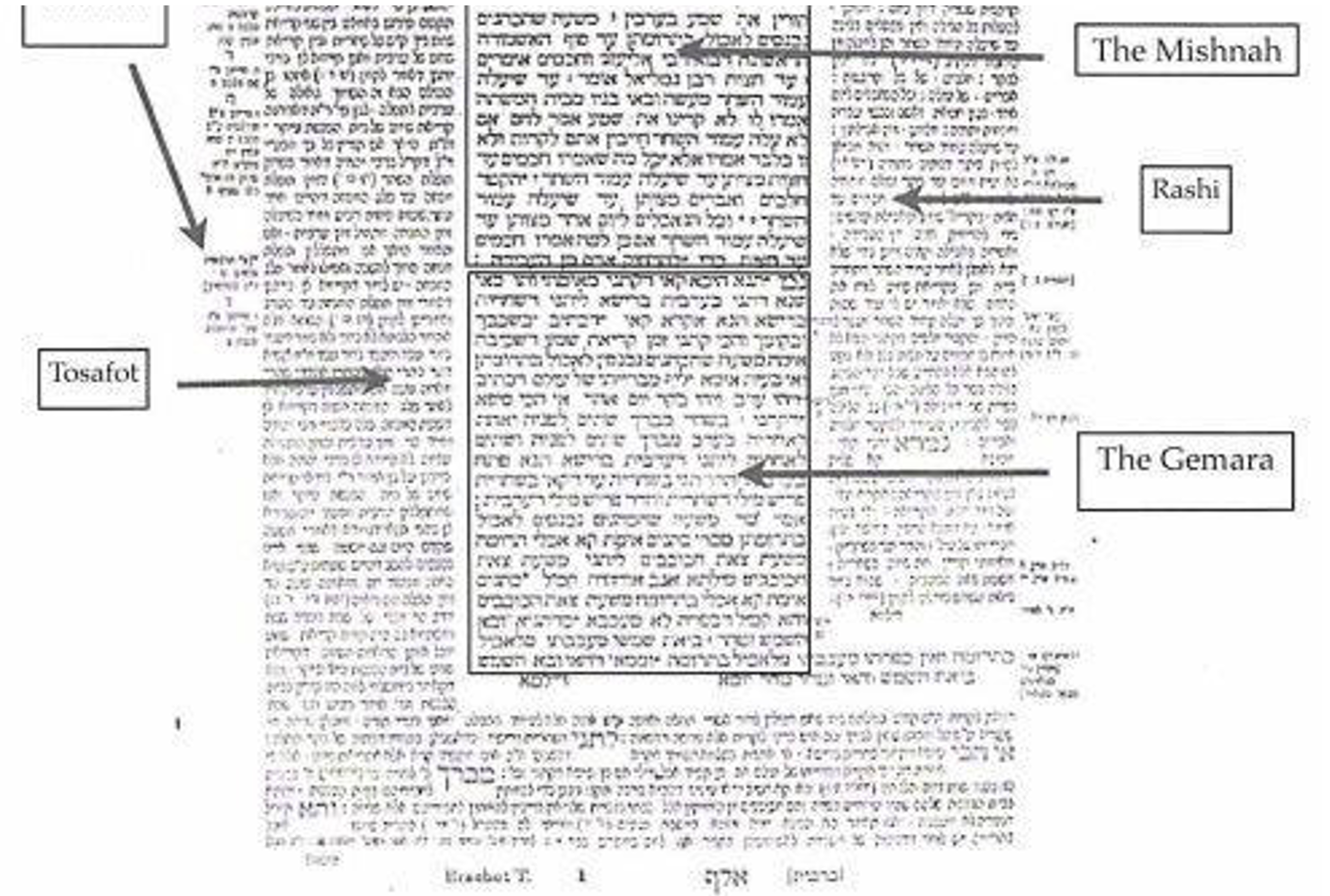
It is impossible to definitively conclude that the Trial directly caused the end of the period of the Tosafists. The decline of Jewish intellectual activity may have been due to a creative process naturally running its course, as mentioned by Haym Soloveitchik.[53] However, is it just a coincidence that such works ceased to be written right around the time that the Talmud was burned? If the Talmud had been burned in France prior to Rashi entering the stage, that destruction would have been responsible for preempting his scholarship. Accordingly, if the Trial did prematurely curtail the Tosafists’ writing, it would not be an exaggeration to say that it altered the way in which portions of the Talmud would be learned for the duration of history. In any case, never again did French Jews occupy such a prominent role in Jewish scholarship. In this manner, the shadow of 1240 looms large by leading to the downfall of a critical hub of Jewish learning and authorship.
Part IV: Impact on Christian Views
Pope Gregory IX was at least partially responsible for perpetuating his antisemitic approach to the next Pope, Innocent IV, who was inaugurated in 1243. It is clear that Pope Innocent IV shared Gregory IX’s negative attitude toward the Jews and concurred with the damnation of the Talmud as heretical. Likely because of Gregory’s influence, Innocent’s sharp tone in reiterating the call to burn the compendium feels particularly strident and reveals a deep-seated disdain of Jews:
The wicked perfidy of the Jews, from whose hearts our Redeemer has not removed the veil of blindness because of the enormity of their crime, but has so far permitted to remain in blindness such as in measure covers Israel, does not heed, as it should, the fact that Christian piety received them and patiently allows them to live among them through pity only. Instead, it (the perfidy) commits such enormities as are stupefying to those who hear of them, and horrible to those who tell them. For, ungrateful to the Lord Jesus Christ, who, in the abundance of His kindliness, patiently expects their conversion, they, displaying no shame for their guilt nor reverence for the honor of the Christian Faith, throw away and despise the Law of Moses… In it [the Talmud] are found blasphemies against God and His Christ, and obviously entangled fables about the Blessed Virgin, and abusive errors, and unheard of follies.[54]
While Innocent IV did not argue that Jews no longer serve their theological purpose, he certainly implied it. If Jews discarded the Law of Moses, how could they be preservers of the Old Testament?
Innocent’s point seems clear: Jews are so wicked that Christian patience (for their conversion) is being tested, meaning that Jews’ place in Christian Europe is unstable.
Another impact of the Trial of the Talmud is that it played a significant role in legitimizing anti-Jewish sentiment within the broader Christian community specifically because it was initiated by a papal letter and supported by the king. When two of the most powerful people in Europe publicly called for the trial/destruction of the Talmud, it sent a clear message to all Christian clergy across northern Europe: one sided investigations and accusations against Jews were not at odds with the Christian approach toward Judaism. In other words, tolerance was no longer valued as highly. Moreover, since most common people were not privy to the contents of the debate, the lesson they took from the mass burning of the Talmud in a public square was that Judaism was nefarious in the eyes of the king and Church[55]. Likely a Christian mob took inspiration from this event, and felt condoned by the king, when they ransacked a synagogue in Bourges in 1251 and burned Jewish texts.[56] As William Jordan put it, people must have appreciated “what seemed to be the official position of the crown. That is not to say that the king countenanced violence, merely that the atmosphere he helped create and the attitude of hate that intelligent people attributed to him were quite likely to stimulate violence against Jews or give it a hint of respectability unless he came out firmly against the excess.”[57] When these “intelligent people” were evaluating Louis’ attitude, it seems clear which way his decree to publicly burn the Talmud was meant to influence them. Even though Pope Innocent IV later backtracked on the outright ban of the Talmud, replacing it with censorship instead, many saw the move as a mistake[58]. In many ways, the damage had already been done as the Trial and subsequent burning of the Talmud were widely followed in a public process in which the highest Christian authorities had revealed their true intentions, opening a pandora’s box. It is in this sense that the Trial “added further substance to the accelerating sense of Jewish enmity and malevolence.”[59]
The records of an influential papal legate named Odo of Chateauroux (1190-1273) illustrate the enduring negative influence of the Trial even after Pope Innocent IV attempted to reverse the condemnation of the Talmud as heretical. After reiterating the claims brought by Donin in the trial, Odo argued that it would be inappropriate for anyone, even another pope, to contradict Gregory’s IX’s edict. Odo lambasted the Talmud, arguing that the Jewish defense was chicanery:
It was found that the said books were full of errors, and a veil has been placed over their hearts to such an extent that these works turn the Jews away not only from a spiritual understanding but even from a literal one and toward fables and fictions. Hence it is obvious that the masters of the Jews of the kingdom of France recently uttered a falsehood to Your Holiness and the venerable fathers, the lord cardinals, when they said that they are unable to understand the Bible and other provisions of their Law according to their faith without those books that are called in Hebrew the Talmud.[60]
These remarks by Odo make it clear that either the Trial genuinely convinced him that the Talmud was heretical, or he felt that the Trial and the attitude by Pope Gregory IX condoned his already existent anti-Jewish fervor. Either way, Odo manifested a threat to Jewish religious life by arguing that “although the aforesaid books contain some good things, although few and far between, they must be utterly condemned.”[61]
Later, the Paris ecclesiastical leadership rejected the call to return the unredacted portions of the Talmud to the Jews, stating that it “contained innumerable errors, insults, and offensive things that are a source of shame… [and] cannot be tolerated in the sight of God without damage to the Christian faith.”[62] What becomes clear from these reports is that the initial letter condemning the Talmud by Pope Gregory IX resonated with many clergy in western Christendom, and Pope Innocent IV’s repeal was largely ineffective. Indeed, French kings repeatedly prohibited the Talmud in the following decades. For instance, when King Louis X issued an edict allowing for the return of French Jewry in 1315, he provided many protections and benefits, yet still felt the need to stipulate that “Likewise, the books of their law which are still held by us, which were not sold, shall be returned to them, except for the condemned Talmud.”[63]
Aside from investigations into the Talmud itself, the proceedings around 1239 gave the green light for religious authorities to challenge Judaism’s intellectual footing: “the disputation of Paris in 1240 had constituted major developments in the relationship of the Church and the Jews, by the end of the thirteenth century such intrusions into the daily religious life of European Jewry by the friars were by no means unusual… real encounters between the friars and Jews now became an important element in the attack of the Church upon Judaism…”[64] Thus, in the thirteenth and fourteenth centuries Christians used the Trial as inspiration for continued attacks aiming to upend Jewish life.[65]
Part V: Beyond Intellectual Consequences:
More than just an intellectual assault, the Trial of the Talmud spread the virus of antisemitism more broadly in daily life. Around 1240, many aspects of Jewish existence in France began to take a turn for the worse. Since Jews were barred from many arenas, such as holding public office, owning land, and joining guilds, they gravitated toward money lending as a profession. Then Louis IX made it illegal for Christians to pay usury as well as for Jews to charge it, ordering that Jews work “by the honest labor of their own hands or by commerce” [66]He also scrutinized Jewish pawning in order to ensure that they were not receiving usury payments.[67] The intent of these policies was to remove Jews from the business of moneylending, crushing their main source of income.[68] Accordingly, if Jews were not allowed to lend money for profit, they had few means of making a living. He also prohibited Jews from entering taverns (unless using them as an inn during transit), further isolating them among themselves.[69] Additionally, royal investigations about usury led commoners to believe that they were being “extorted by an illegal group of creditors and their corrupt helpers.”[70] There were repeated public complaints about negative past experiences involving borrowing from Jews, and as a result soon only the poorest of Christians with few alternatives would engage in business with Jews[71]. Rabbi Meir ben Simeon argued that the king was condemning them to a life of “misery and hunger, banishment and death.” [72]Additionally, the removal of the role of Jews as moneylenders made them dispensable to Christian society.[73] As such, their conversion was more strongly sought after now that such economic benefits to having Jews were removed. Adding to this pressure of conversion was the fact that Louis IX became the first French king to enforce the requirement that Jews wear identifying signs on their clothing.[74] It seems likely that the Trial of the Talmud and the rules about identification markers are closely connected. After all, King Louis IX likely adhered to the view which originated with Peter the Venerable that Jews fall outside the boundaries of Christian society as they are “less than human.” [75]The Trial of the Talmud codified the notion that Judaism was distinct in a negative way from Christianity and that Jews ought to be separated. It does not feel like a stretch that more orders to wear distinct signs soon followed. Unfortunately, such requirements plagued Jews for centuries in Europe, culminating in the Jewish star during Nazi Germany. To the extent that the Trial of the Talmud was one of the main catalysts for this policy shift, then it stands to reason that the disputation had terrible historical significance.
Prohibitions against Jews building new synagogues or refurbishing existing ones added to the feeling that their mode of existence was outdated. Other restrictions contributed to the difficulty of operating as a Jew in Medieval France. For instance, the Council of the Province of Beziers made it illegal for Jews to have Christian servants or nurses in their homes, sell meat on public days when Christians abstain, or work publicly on Sundays or festivals.[76] Additionally, Christians were prohibited from “entrusting themselves for healing to the care of Jews,” essentially barring Jews from the field of medicine.[77] While these individual constraints may have been manageable on their own, putting them all together meant that Jews were faced with acute economic and social pressures which led to substantial conversion as well as immigration: “The number of practicing Jews in the kingdom probably went down considerably from the 1240’s onward.” [78]Indeed, according to Jeremy Cohen, in the decades following the disputation Jews began to convert “en masse.”[79] Most importantly, a few decades later the increased resentment toward the Jews, which had greatly expanded during the Trial, led to the formal expulsion of Jews from France in 1306. The primary motivation seemed to be to rob Jews of their possessions.[80] Although they were allowed to re-enter in 1315 (with an entrance fee), Jews were expelled numerous times until a more lasting expulsion in 1394.[81] Given that the Trial of the Talmud set in motion a series of heightened anti-Jewish sentiments and antisemitic edicts, it is not hard to imagine that it was indirectly responsible for the eventual expulsion of Jews from France.
The question arises as to whether the Trial of the Talmud inspired additional Jewish-Christian debates in other countries, including the Barcelona Disputation of 1263. Admittedly, it would be challenging to prove a direct causal relationship between the two events; however, one can only help but wonder if King James I of Aragon or his clergy were encouraged to instigate the Barcelona Disputation after hearing about the proceedings in France. Supporting this argument is the fact that Pablo Christiani, the accuser, was a protégé of King Louis IX and he attempted to prove the truth of Christianity from the Talmud (an approach that seems to be an adaptation from Donin’s).[82] After all, would it not be an odd coincidence for the second major Christian-Jewish disputation to occur a mere 23 years after the first and both center around the esoteric Talmud? [83]
To the extent this theory has merit, it follows that the Paris Disputation is at least partially responsible for the negative ramifications of the Barcelona Disputation, which itself likely propagated antisemitism in the Iberian Peninsula, eventually culminating in the expulsion of the Jews in 1492. This historical tragedy brought to an end the Golden Age of Jewry in Spain, and expulsion in Portugal followed soon thereafter due to Spanish pressure. Likewise, there are also potential connections between the worsening conditions of the Jews in France after the Trial of the Talmud and the deterioration of the Jews’ situation in England. It seems fairly plausible that King Henry III of England took some inspiration from his brother-in-law King Louis IX when he tried to appropriate significant portions of money from the English Jewish community in the form of taxes. Or perhaps King Louis IX influenced King Edward I of England on their joint crusade in 1270, leading King Edward I to expel England’s Jews in 1290. It is true that these connections between the Trial of the Talmud and negative events for Jews elsewhere in Europe are hard to establish definitively; however, what quickly becomes clear is that there are a great number of avenues in which the Trial could have served as a catalyst for raging antisemitism. Given how easily one antisemitic event begets another, it is quite fathomable that the Trial of the Talmud served as a type of super-spreader event by planting the seeds for worsening conditions for Jews throughout the major powers in Europe. It is interesting to note that centuries later the epicenter of Jewish life in Europe resided in Central and Eastern Europe, decidedly not in the leading Western European countries of France, Spain, and England.
Conclusion
The Trial of the Talmud in 1240 Paris should be seen as a pivotal event that served as a stimulant for the spread of antisemitism in Medieval Europe. More than just an isolated attack on Jewish texts, the Trial represented a fundamental shift in the relationship between Christianity and Judaism. By targeting the Talmud, the intellectual and spiritual foundation of Jewish life, Christian authorities sought to undermine the very essence of Jewish identity and religious practice. The far-reaching consequences of this event extended beyond the realm of intellectual discourse. It paved the way for increasingly harsh economic and social restrictions on Jewish communities, leading to widespread conversion, emigration, and ultimately, expulsion.
Perhaps the most understated impact of the Paris Disputation is somewhat intangible: the spread of Jew-hatred through Medieval Europe resulted in a lasting shifting of the Overton window regarding the treatment of Jews. As William Chester Jordan put it, “Thus in the end there was something inexorable about the development of royal policy. In the Jews the crown discovered a group that it could confront, humiliate, and exploit for moral, political, and financial purposes. It discovered that the extent and intensity of sympathy for the group were extremely small and that what there was of it could be defused with relative ease.”[84] This discovery unfortunately persisted and became one that has threatened Jewish existence ever since. Indeed, in our own time, as we witness the resurgence of Jew-hatred globally including in some unexpected places, the lessons of the Trial of the Talmud feel particularly poignant—sometimes specific incidents of antisemitism can quickly propagate and escalate into unbridled hatred. All it takes is a few key players to waken the dormant virus.
Bibliography
Berger, David. “Mission to the Jews and Jewish-Christian Contacts in the Polemical Literature of the High Middle Ages.” The American Historical Review 91, no. 3 (1986): 576–91. https://doi.org/10.2307/1869132.
Carroll, James. Constantine’s Sword: The Church and the Jews. Boston: Houghton Mifflin Harcourt, 2002.
Chazan, Robert. Medieval Jewry in Northern France: A Political and Social History. Baltimore: Johns Hopkins University Press, 1974.
Chazan, Robert. “The Condemnation of the Talmud Reconsidered (1239-1248).” Proceedings of the American Academy for Jewish Research 55 (1988): 11–30. https://doi.org/10.2307/3622675.
Chazan, Robert et al. ed. The Trial of the Talmud Paris, 1240. Toronto: Pontifical Institute of Medieval Studies, 2012.
Cohen, Jeremy. Essential Papers on Judaism and Christianity in Conflict. New York: New York University Press, 1991.
Cohen, Jeremy. Living Letters of the Law: Ideas of the Jew in Medieval Christianity. Oakland, CA: University of California Press, 1999.
Cohen, Jeremy. The Friars and the Jews. Ithaca, New York: Cornell University Press, 1985. Grayzel, Solomon. The Church and the Jews in the XIIIth Century: A Study of Their Relations During the Years Ll98-1254 Based on the Papal Letters and the Conciliar Decrees of the Periods. New York: The Jewish Theological Seminary of America, 1933.
Hames, Harvey J. “Kings and Conversion in the Thirteenth Century: Where Politics and Religion Meet?” Archives de Sciences Sociales Des Religions 63, no. 182 (2018): 227–48. https://www.jstor.org/stable/26612864.
Hood, John Y.B. Aquinas and the Jews. Philadelphia: University of Pennsylvania Press, 2010. Jordan, William Chester. The French Monarchy and the Jews: From Philip Augustus to the Last Capetians. Philadelphia: University of Pennsylvania Press, 2016.
Lasker, Daniel J. “The Impact of the Crusades on the Jewish-Christian Debate.” Jewish History 13, no. 2 (1999): 23–36. http://www.jstor.org/stable/20101374.
Marcus, Jacob Rader and David Saperstein, ed. The Jews in Christian Europe. New York: Hebrew Union College Press, 2015.
Maccoby, Hyam trans. and ed. Judaism on Trial. Liverpool: Liverpool University Press, 1982. Michael, Robert. A History of Catholic Antisemitism: The Dark Side of the Church. New York: Springer, 2008.
Morlet, Sébastien. Jewish-Christian Disputations in Antiquity and the Middle Ages: Fictions and Realities. Leuven: Peeters, 2020.
Nicholls, William. Christian Antisemitism: A History of Hate. Lanham, MD: Rowman & Littlefield, 1995.
Rosenthal, Judah M. “The Talmud on Trial: The Disputation at Paris in the Year 1240.” The Jewish Quarterly Review 47, no. 1 (1956): 58–76. https://doi.org/10.2307/1453186.
Schwarzfuchs, Simon R. “The Expulsion of the Jews from France (1306).” The Jewish Quarterly Review 57 (1967): 482–89. https://doi.org/10.2307/1453511.
Stow, Kenneth R. Alienated Minority: The Jews of Medieval Latin Europe. Cambridge, MA: Harvard University Press, 1996.
Soloveitchik, Haym. “Catastrophe and Halakhic Creativity: Ashkenaz—1096, 1242, 1306 and 1298.” Jewish History 12, no. 1 (March 1, 1998): 71–85. https://doi.org/10.1007/bf02335454.
Notes
- Jeremy Cohen, Living Letters of the Law: Ideas of the Jew in Medieval Christianity (Oakland, CA: University of California Press, 1999), 11. ↩
- Romans 3:2. ↩
- Cohen, Living Letters of the Law, 19. ↩
- Romans 4:14. ↩
- See: John Y.B. Hood, Aquinas and the Jews (Philadelphia: University of Pennsylvania Press, 2010). ↩
- Solomon Grayzel, The Church and the Jews in the XIIIth Century: A Study of Their Relations During the Years 1198-1254 Based on the Papal Letters and the Conciliar Decrees of the Periods (New York: The Jewish Theological Seminary of America, 1933), 12. ↩
- Cohen, Living Letters of the Law, 58 ↩
- Ibid, 2. ↩
- Romans 11:25-26. ↩
- Robert Michael, A History of Catholic Antisemitism: The Dark Side of the Church (London: Palgrave Macmillan, 2008), 29. Augustine also thought that the Jews were destined for a special subset of hell. ↩
- Cohen, Living Letters of the Law, 70. ↩
- David Berger, “Mission to the Jews and Jewish-Christian Contacts in the Polemical Literature of the High Middle Ages,” The American Historical Review 91, no. 3 (1986): 576. ↩
- Ibid. ↩
- Grayzel, The Church and the Jews, 93. ↩
- Ibid. ↩
- Robert Chazan, Medieval Jewry in Northern France: A Political and Social History (Baltimore: Johns Hopkins University Press, 1974), 36. ↩
- Ibid. ↩
- Ibid, 38. ↩
- Jeremy Cohen, The Friars and the Jews: The Evolution of Medieval Anti-Judaism (Ithaca, NY: Cornell University Press, 1983), 60. ↩
- Robert Chazan et al., The Trial of the Talmud Paris, 1240 (Toronto: Pontifical Institute of Medieval Studies, 2012), 37. ↩
- Ibid, 40 ↩
- Cohen, The Friars and the Jews, 61. It would make sense for a Karaitic Jew to disdain the Talmud. After all, it is based on the oral tradition from Moses at Sinai, which Karaites reject as they strictly adhere to the written law of the Five Books of the Bible. ↩
- Ibid. ↩
- While we do not have proof of this, Yehiel himself stated it during the debate. It seems unlikely for him to have done this if it were not true as he would have been quickly called out as a liar. ↩
- Cohen, The Friars and the Jews, 71. ↩
- Grayzel, The Church and the Jews, 340. ↩
- Cohen, The Friars and the Jews, 71 ↩
- Even though he is not well-known to the masses, Donin can be viewed as one of the great antagonists to Judaism in the Middle Ages. ↩
- Grayzel, The Church and the Jews, 199. ↩
- Ibid, 201. ↩
- Ibid, 203 ↩
- Ibid. ↩
- Ibid, 227. ↩
- Ibid. ↩
- Ibid. ↩
- Ibid, 241. ↩
- Ibid. ↩
- Ibid. ↩
- Ibid, 243. ↩
- Chazan, Trial of the Talmud, 43. ↩
- The portions of the Talmud that disparage Jesus and Mary are exceedingly few compared to the overall voluminous nature of the work. In hindsight, it is truly astounding that Jews in Medieval Europe who were subjugated under Christian rule did not disparage Christian religious figures more. ↩
- Chazan, Trial of the Talmud, 36 ↩
- He seems to have listened to his own advice, encouraging his clergy to dispute with Jewish leaders in the Trial. Regarding the comment about plunging a sword into Jews, Louis purportedly said, “no one who is not a very learned clerk should argue with them [the Jews]. A layman, as soon as he hears the Christian faith maligned, should defend it only by the sword, with a good thrust in the belly, as far as the sword will go.” See: Chazan, Trial of the Talmud, 38. ↩
- Hyam Maccoby, Judaism on Trial: Jewish-Christian Disputations in the Middle Ages (Liverpoool: Liverpool University Press, 1984), 22. ↩
- Jacob R. Marcus and Marc Saperstein, The Jews in Christian Europe: A Source Book, 315-1791 (New York: Hebrew Union College Press, 2016), 136-137. ↩
- Chazan, Trial of the Talmud, 37. ↩
- Indeed, in many respects the Talmud is still the sine qua non of Judaism today. ↩
- William Chester Jordan, The French Monarchy and the Jews: From Philip Augustus to the Last Capetians (Philadelphia: University of Press, 1989), 139. ↩
- Ibid. ↩
- It is very curious that the primary source of Jewish distress about the burning of the Talmud in Paris comes not from a Frenchman but rather from a German Rabbi and poet. Perhaps none of the French records survived, or maybe they were never written due to a tremendous state of fear among the French Jewish community. ↩
- Chazan, Trial of the Talmud, 169. ↩
- Indeed, many agree that Rashi and the Toasfists still reign supreme as the greatest commentators in all of Jewish history. ↩
- Haym Soloveitchik, “Catastrophe and Halakhic Creativity: Ashkenaz – 1096, 1242, 1306, 1298,” Jewish History 12 (1998): 71-85. ↩
- Grayzel, The Church and the Jews, 251. ↩
- Chazan, Trial of the Talmud, 86. ↩
- Jordan, The French Monarchy and the Jews, 147 ↩
- Ibid. ↩
- Chazan, Trial of the Talmud, 30. ↩
- Ibid, 1. ↩
- Ibid, 27. ↩
- Ibid, 29. ↩
- Ibid, 30. ↩
- Ibid. ↩
- Cohen, The Friars and the Jews, 77, 82. ↩
- Ibid, 78 ↩
- Jordan, The French Monarchy and the Jews, 148. Although, some anti-usury laws were enacted before 1240, King Louis IX took the issue more seriously and enacted more anti-usury laws subsequent to the Trial. ↩
- Ibid, 134. ↩
- Ibid, 149. ↩
- Ibid, 135. ↩
- Ibid, 158. ↩
- Ibid. ↩
- Ibid. ↩
- Grayzel, The Church and the Jews, 83. ↩
- Jordan, The French Monarchy and the Jews, 161. ↩
- Chazan, Trial of the Talmud, 13. ↩
- Grayzel, The Church and the Jews, 332. ↩
- Ibid. ↩
- Jordan, The French Monarchy and the Jews, 152. ↩
- Cohen, The Friars and the Jews, 87. ↩
- Simon R. Schwarzfuchs, “The Expulsion of the Jews from France (1306),” The Jewish Quarterly Review 57 (1967): 482-89. ↩
- Ibid. ↩
- Maccoby, Judaism on Trial, 22. ↩
- Indeed, it does not seem that the Talmud was on the radar of leading Christian authorities pre-1239. ↩
- Jordan, The French Monarchy and the Jews, 256. ↩